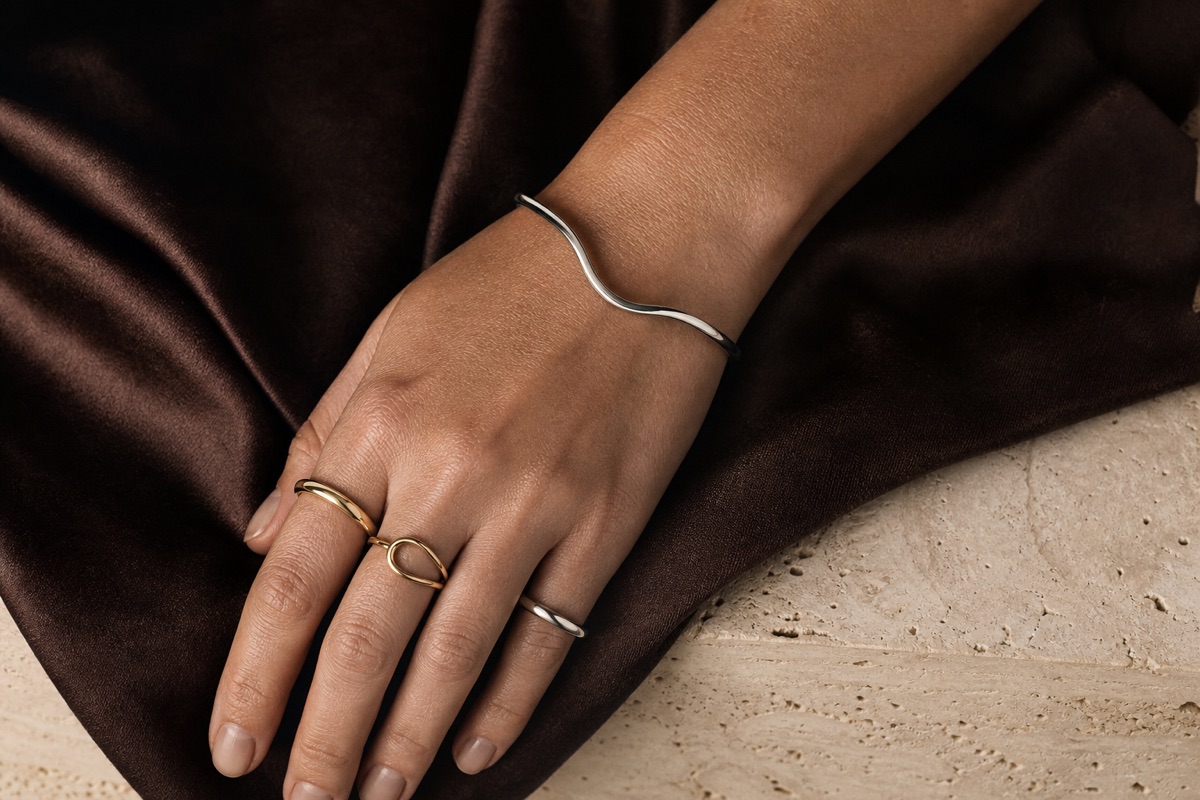
Jewelry Care
Small rituals, lasting attention
Care depends on a piece’s complete material composition and construction. Begin with these gentle habits, then follow any product-specific instructions supplied with your jewelry.
01 / Everyday care
Store pieces separately
- Remove jewelry before sleeping, exercise, strenuous activity, or any task that may pull, bend, or scratch it.
- Keep pieces in a dry, stable environment away from prolonged direct sunlight and high humidity.
- Store pieces separately in soft pouches or lined compartments to limit contact and tangling.
- Fasten chains before storage and lay delicate pieces flat when practical.
- Wipe jewelry gently after use with a clean, dry, non-abrasive cloth.
02 / Water
Keep jewelry away from unnecessary moisture
Remove jewelry before showering, bathing, swimming, or using a sauna. Water exposure can affect finishes, settings, stringing materials, adhesives, and surface appearance in different ways.
If a piece becomes wet, blot it gently with a soft cloth and allow it to dry fully before storage. Do not use heat to accelerate drying.
03 / Cosmetics and chemicals
Dress first, add jewelry last
- Allow perfume, hairspray, lotion, sunscreen, and cosmetics to dry before putting on jewelry.
- Avoid direct contact with household cleaners, chlorine, bleach, solvents, and other chemicals.
- Remove jewelry before using hand sanitiser when practical, especially for plated or surface-finished pieces.
- Do not use toothpaste, abrasive powders, rough brushes, or polishing products unless explicitly approved for the complete piece.
04 / Cleaning
Use the least aggressive method
- Check the product page for every material, gemstone, finish, coating, adhesive, and care restriction.
- Begin with a clean, dry, non-abrasive cloth and light pressure.
- Use liquids, brushes, solutions, steam, or ultrasonic equipment only when compatibility has been confirmed for the entire piece.
- Stop if the cloth catches, a component moves, a surface changes, or you are uncertain about the construction.
05 / Gemstones
Treat every gemstone as material-specific
Gemstones differ in hardness, toughness, porosity, stability, treatment, and setting. A method that suits one stone may damage another or affect its setting.
- Protect gemstone surfaces and edges from knocks, pressure, and abrupt temperature changes.
- Do not soak a piece unless its care guidance confirms that every stone, setting, adhesive, and metal component is compatible.
- Keep pearls and other potentially sensitive organic materials away from perfume, cosmetics, and aggressive cleaning methods.
- Ask a qualified professional to inspect loose, moving, or damaged settings before further wear.
06 / Silver
Respond gently to surface darkening
Silver can develop surface darkening through exposure to air, humidity, cosmetics, and other environmental factors. Store it dry and separately, and wipe it after use.
Use a polishing cloth or product only when it is approved for the confirmed alloy, finish, gemstones, and construction. Excessive polishing can alter intentional finishes or remove material over time.
07 / Plated and vermeil finishes
Reduce friction and chemical contact
Surface finishes can change with wear. Friction, moisture, cosmetics, chemicals, and repeated abrasive cleaning may accelerate visible change.
- Put plated pieces on after cosmetics have dried.
- Remove them before water exposure, exercise, or cleaning tasks.
- Store separately and avoid rubbing against harder pieces.
- Use only a soft, dry cloth unless product-specific instructions state otherwise.
08 / Inspection
Pause when something changes
- Stop wearing a piece if a stone, clasp, post, link, setting, or component feels loose or damaged.
- Do not force bent parts back into place.
- Photograph the condition and contact client care with the product name and purchase details.
- Assessment and service options vary by piece; wait for guidance before sending the item.